Products
Seven product groups, chosen to cover what a data hall or a comms room actually needs to run: power in, power distributed, power switched between sources, the racks it all sits in, the compute and storage the power exists to protect, and the cabling that ties it all together. Each group page lists the product families or cable types we actually source, what separates them, and a quote form that already knows which group you are looking at.
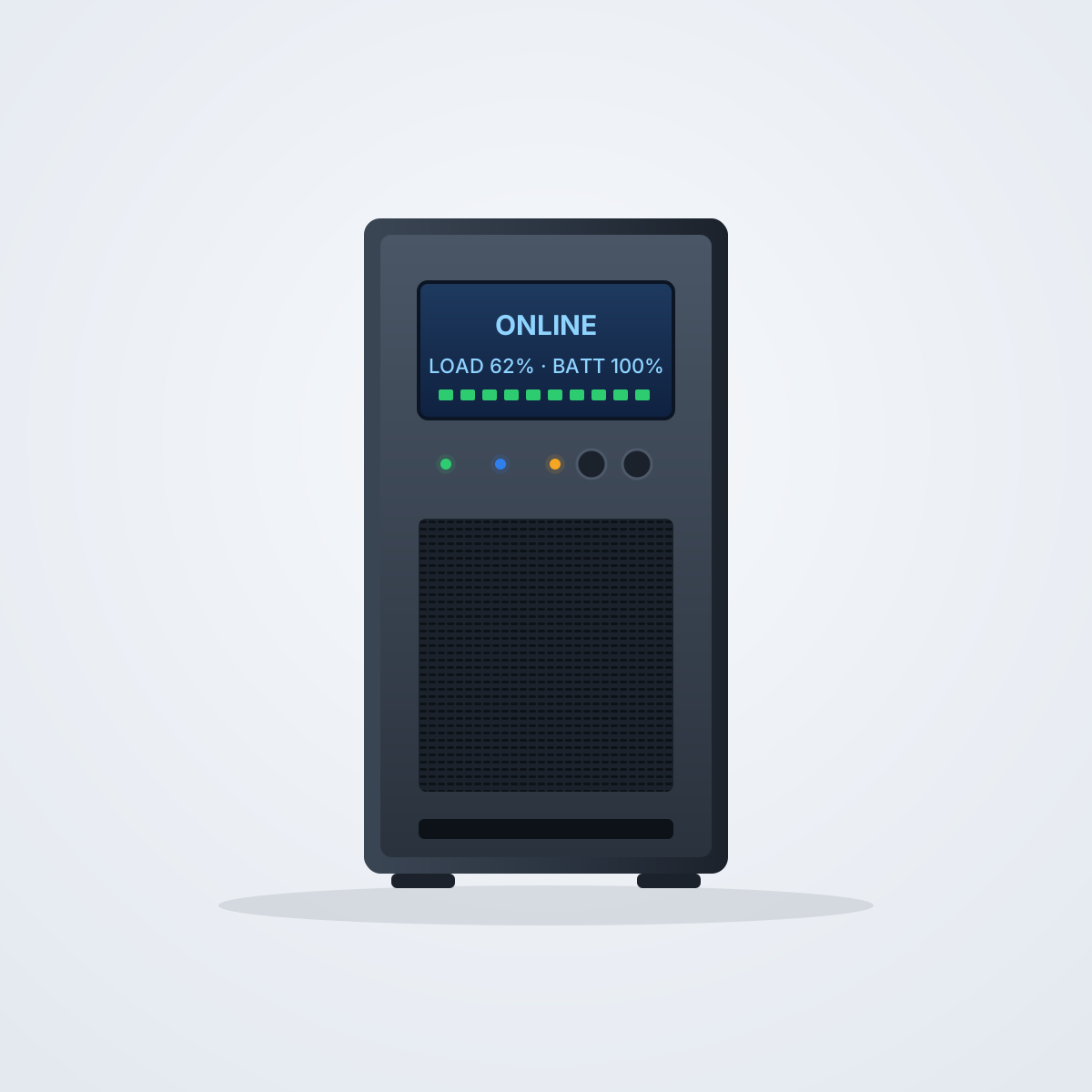
A UPS decides how long equipment keeps running when the mains fails and how cleanly it rides through a voltage sag or a generator transfer. We source 22 families across this range, from 1 kVA rack units for a single comms cabinet to modular systems scaling past 3.4 MW for a full data hall, including Schneider Galaxy VX for large three-phase installations. The choice usually comes down to topology, runtime and whether the site needs parallel redundancy.
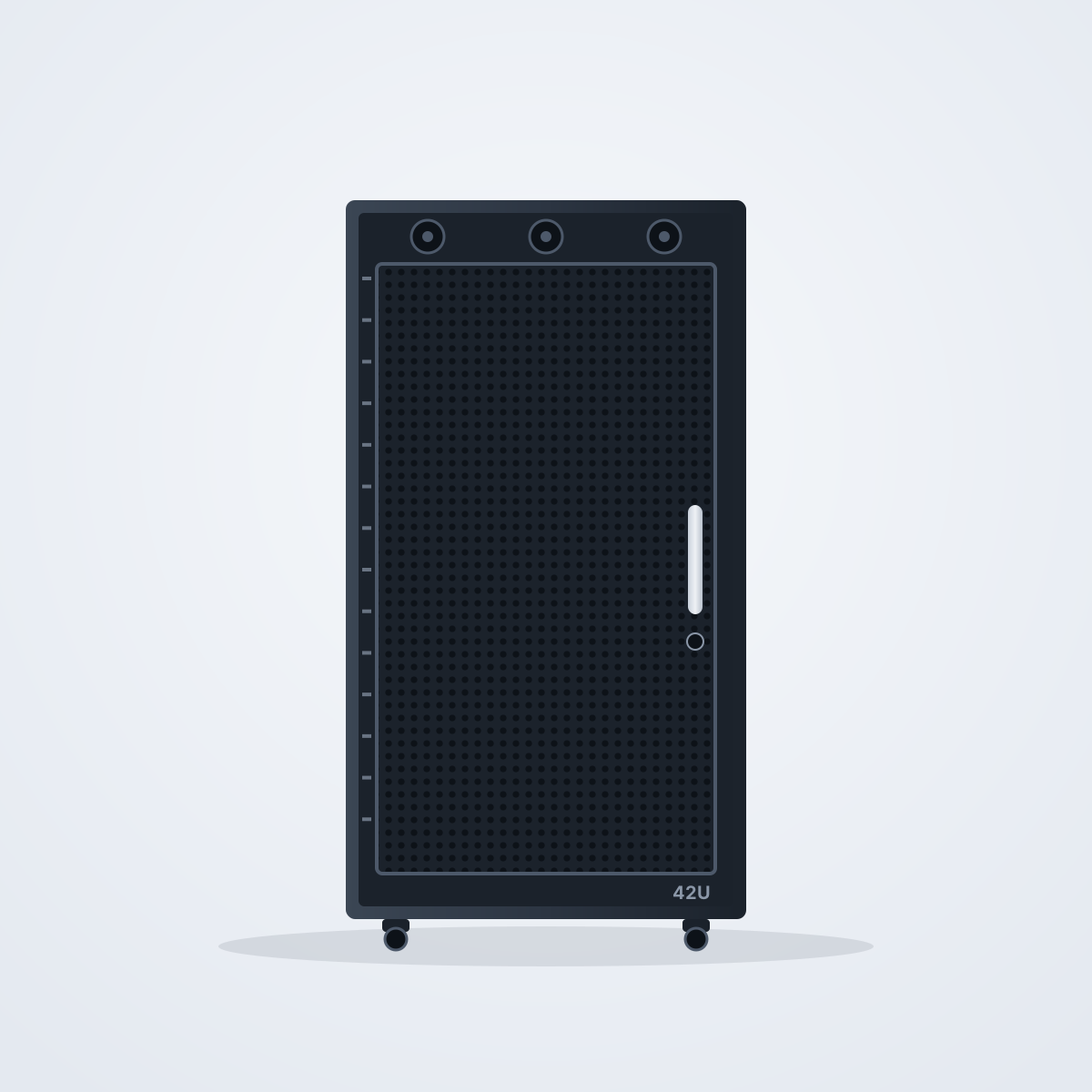
The cabinet decides how much equipment fits, how it is cooled, and whether a row can be sealed into hot-aisle/cold-aisle containment later. We source 12 families of 19-inch cabinets from 24U to 52U, 600 or 800 mm wide and 1000 to 1200 mm deep, including dedicated aisle-containment options such as Vertiv SmartAisle. The decision usually turns on static load rating, door perforation for airflow, and whether the row needs to standardise on one cabinet family.
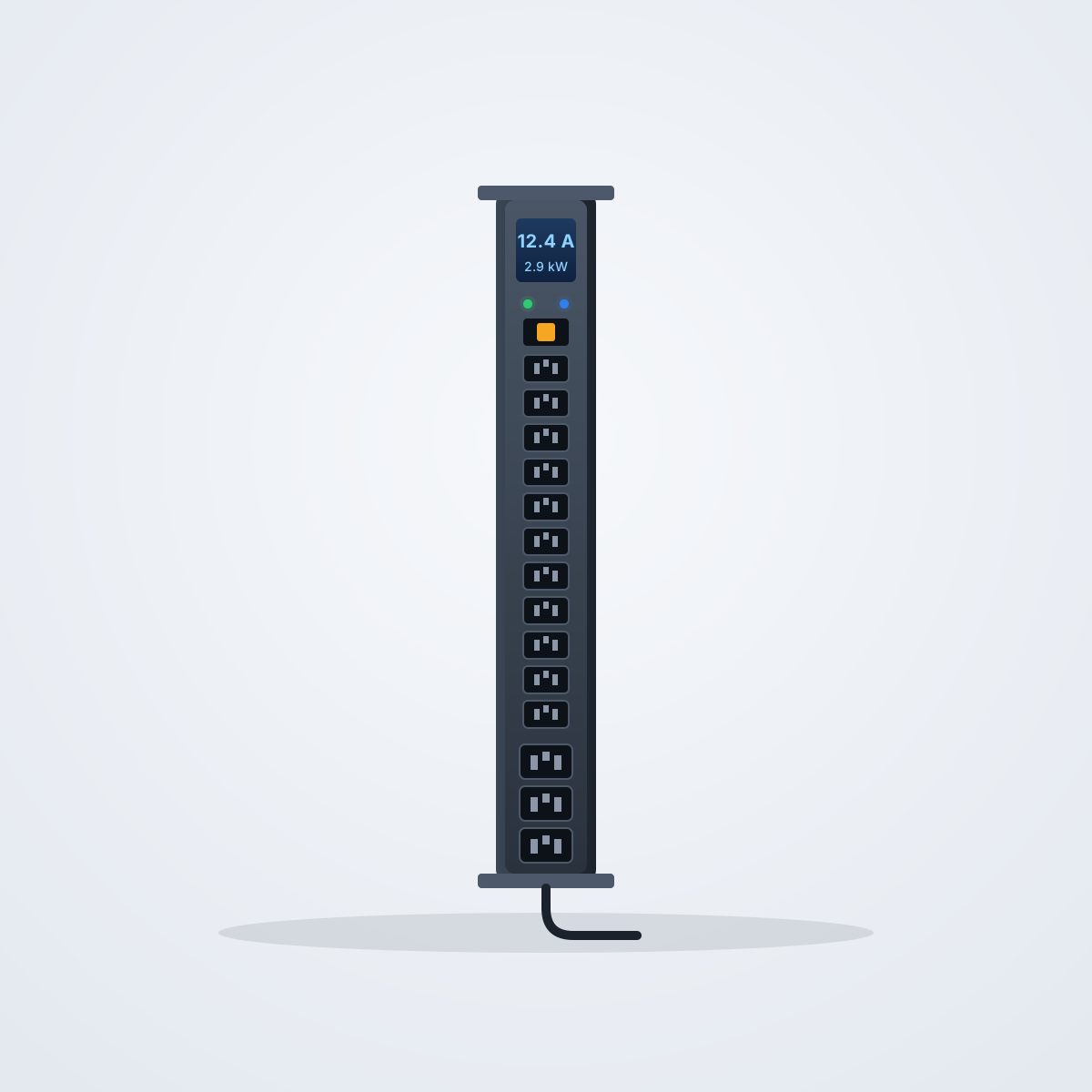
The PDU decides how power actually reaches equipment inside the rack, and whether anyone can see or control it once it is running. We source 18 families spanning 0U and 1U formats, basic through per-outlet metered and switched control, at 16 to 63 A, including build-to-order platforms such as Raritan PX4. The choice depends on outlet count and type, whether remote monitoring is required, and the current the branch circuit actually supplies.
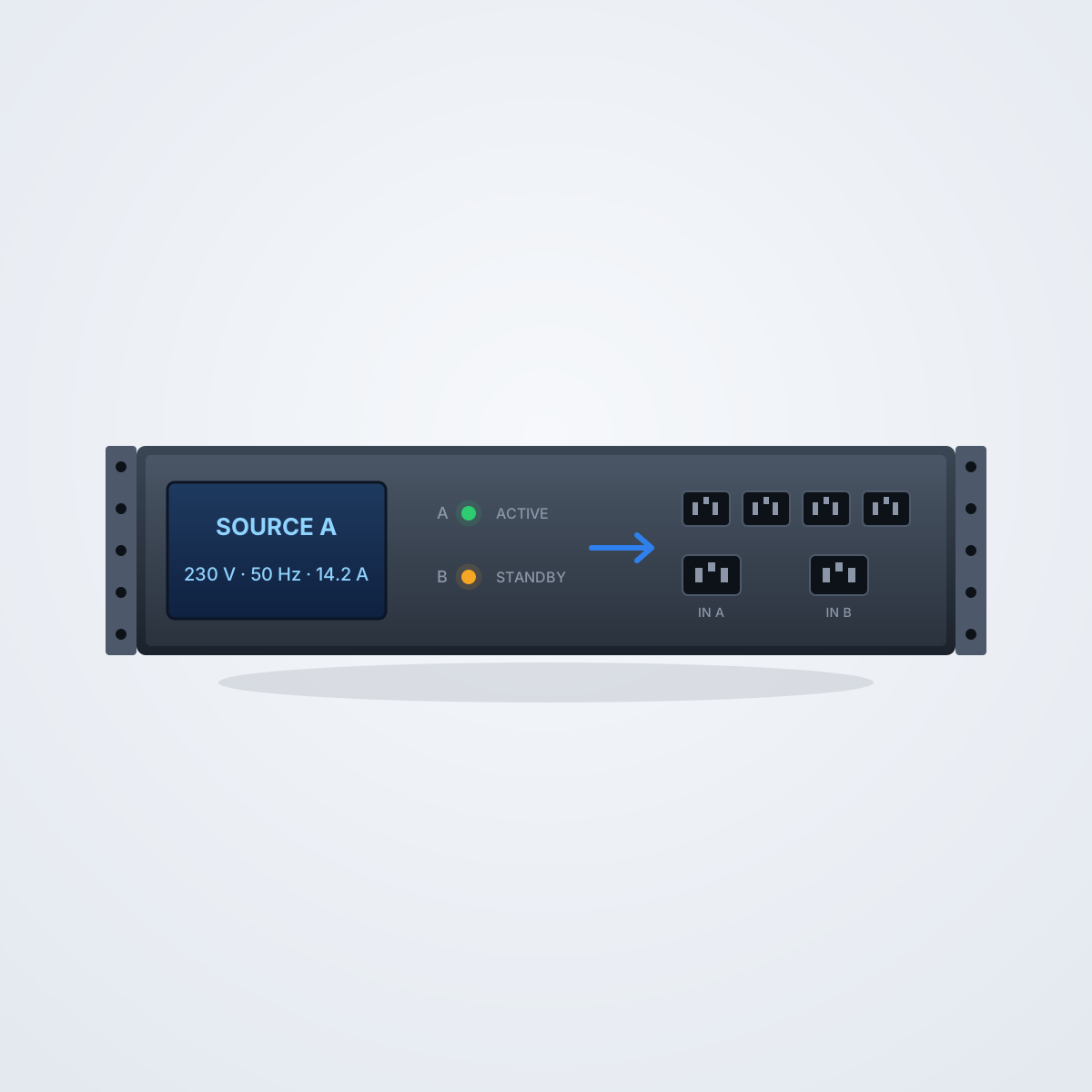
An ATS decides how a rack or a whole building moves from one power source to another without dropping the load, whether that is a redundant utility feed or a generator. We source 15 families from 1U rack-mounted units at 10 A up to panel-integrated switches rated to 3200 A, including all-in-one platforms such as ABB TruONE. The right family depends on the current, the number of poles, and whether the transfer needs to be automatic or staffed.
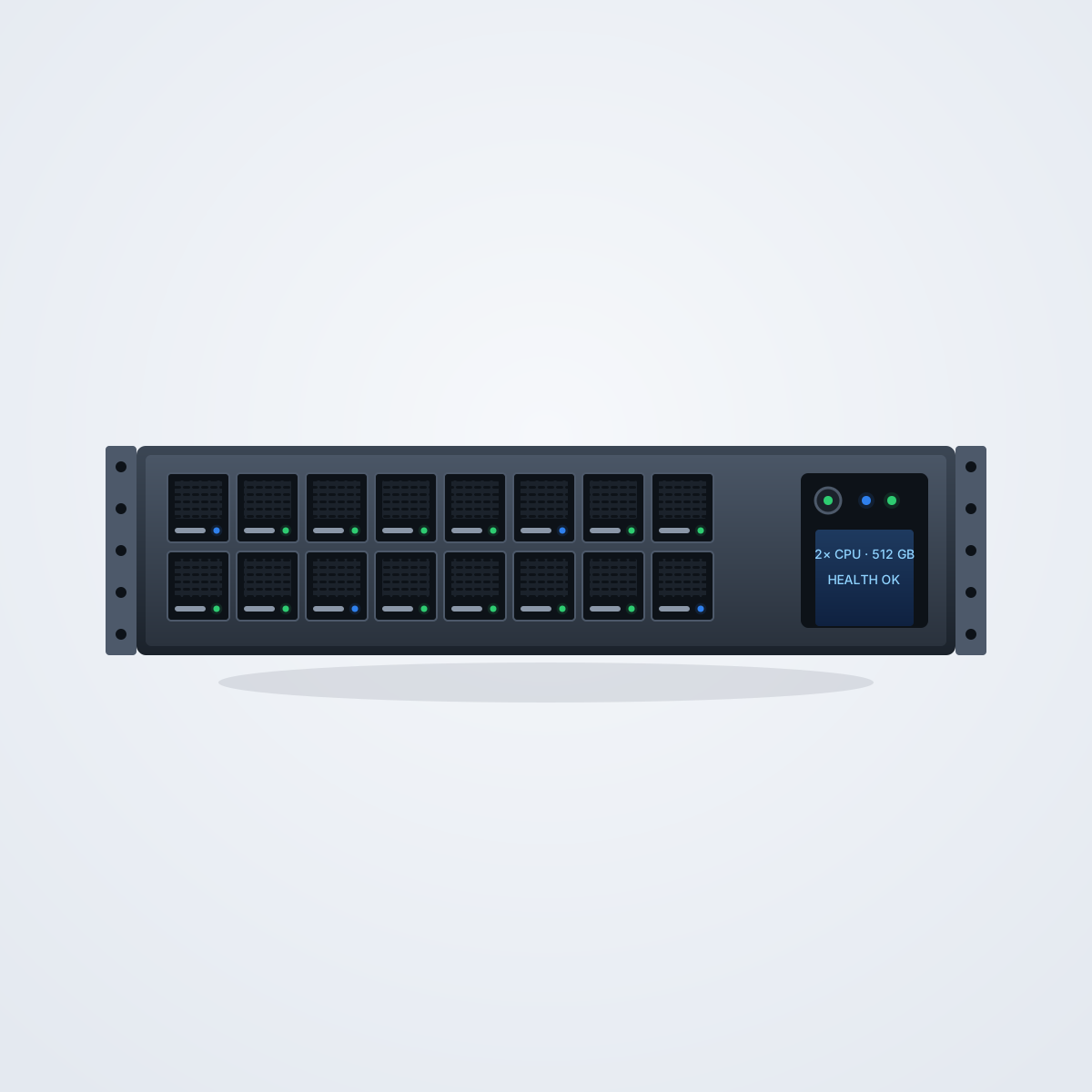
The server decides how much of the workload can run per rack unit, and whether the bottleneck is compute, memory or drive density. We source 17 families of 1U, 2U and 4U rack servers on current Intel Xeon and AMD EPYC, plus GPU-dense platforms such as Supermicro GPU SuperServer for AI training. The decision usually comes down to socket count, drive bay configuration and whether the workload needs dedicated GPU acceleration.
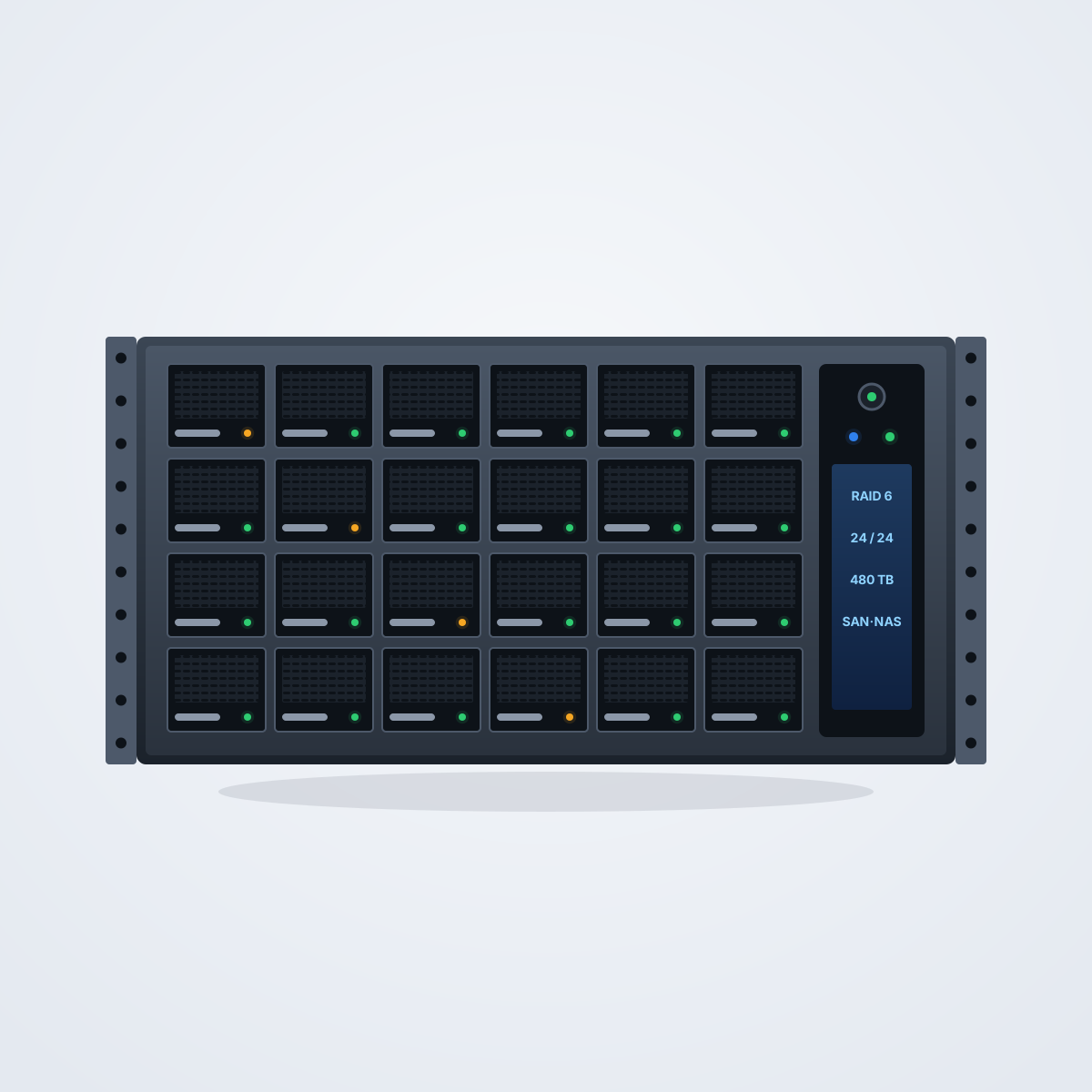
Storage decides how much usable capacity is available, at what performance, and over which protocol the servers actually reach it. We source 19 families spanning all-flash and hybrid arrays, entry SAN, scale-out NAS and object storage, including all-flash platforms such as Everpure FlashArray//XL for the highest-density tier. The choice depends on protocol (NFS, SMB, iSCSI, Fibre Channel or NVMe-oF), drive type and how the capacity needs to scale over time.

Cable type decides whether a link is even physically possible before brand ever enters the picture: port type, distance and signal speed rule out most of the guesswork on their own. We source four segments as cable types and technical specifications only, fiber optic, structured copper, DAC/AOC and power cords and feeders, with no brand or model list attached. The choice usually comes down to the equipment on both ends, the run length and the fire code the room falls under.