The Schneider Electric Basic Rack PDU series, including model codes AP7541, AP7552, AP9565, AP9567 and AP6032A, provides unmetered basic power distribution for server racks. These units deliver outlets for connecting IT equipment to power without built-in metering, monitoring, or remote switching features. They represent the entry-level tier within Schneider Electric’s rack PDU lineup, built for environments where simple, reliable power distribution is the priority. Because they skip the electronics found in metered or switched units, they are positioned as the most economical option for basic rack power needs. This spotlight walks through how the series works, where it fits, and how the models compare to one another.
What Is a Basic Rack PDU
A basic rack PDU is essentially a power strip engineered for rack mounting, distributing incoming power to multiple outlets so that servers, switches, and other rack-mounted devices can be plugged in directly. Unlike metered or monitored PDUs, a basic unit does not display load information or allow remote access. The Schneider Electric Basic Rack PDU models, AP7541, AP7552, AP9565, AP9567, and AP6032A, fall squarely into this unmetered category. They are designed to do one job well: distribute power safely and consistently across the rack. For teams that already track power consumption at the upstream UPS or panel level, a basic PDU avoids paying for redundant visibility features.
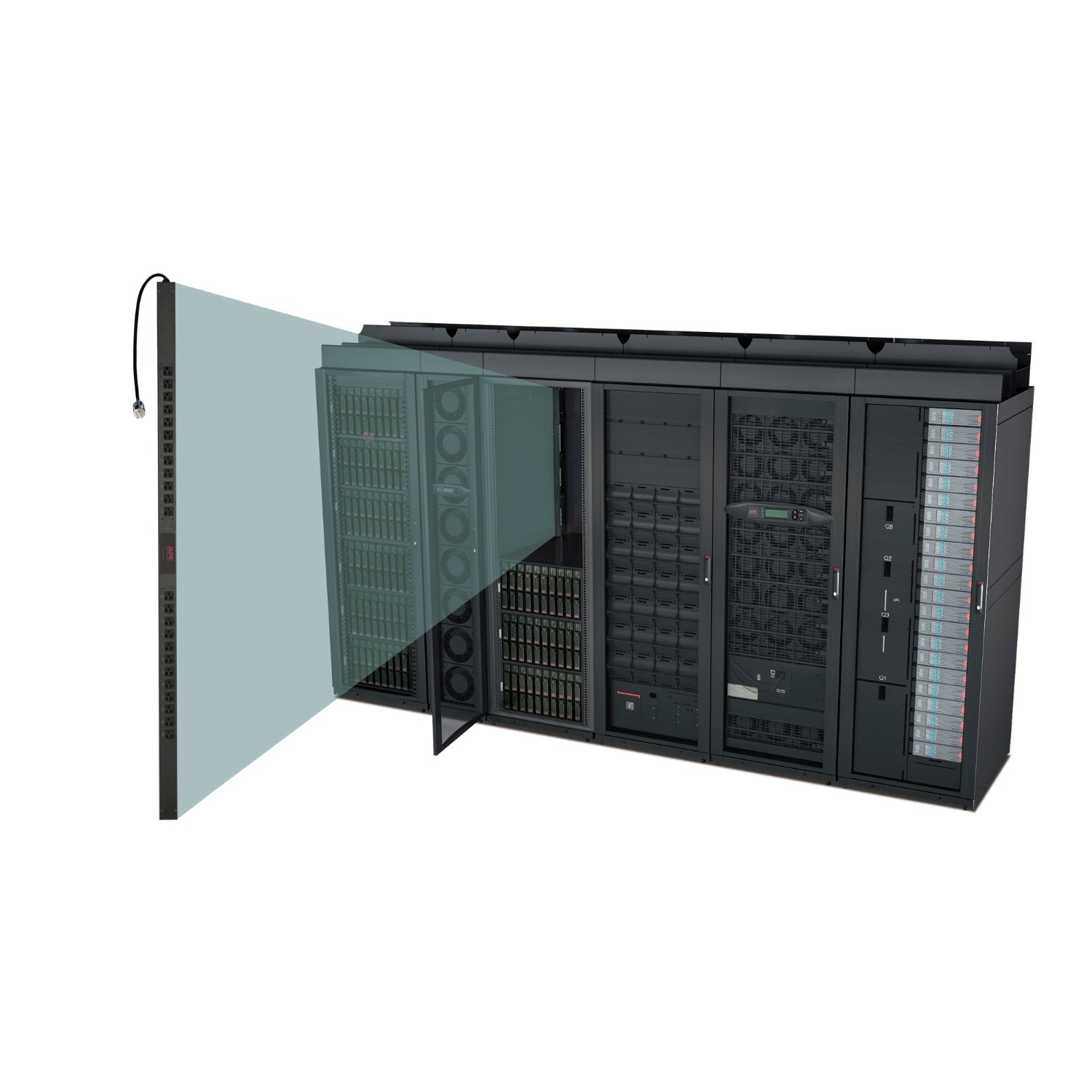
How It Works
These PDUs accept incoming power through a single input connection and distribute it across a set of outlets mounted along the unit’s body. There is no internal display, network card, or sensor circuitry involved, which keeps the internal design straightforward and the failure points minimal. Power simply passes through from the input to each outlet, governed only by the unit’s circuit protection. This simplicity is part of the appeal: fewer components generally mean fewer things that can fail over the PDU’s service life. Within the Schneider Electric lineup, the AP7541, AP7552, AP9565, AP9567 and AP6032A all follow this same unmetered distribution principle, differing mainly in form factor and outlet configuration rather than in underlying technology.
When and Where It’s Used
Basic rack PDUs like these are commonly deployed in smaller server rooms, branch office racks, lab environments, and any setting where power monitoring is handled elsewhere in the infrastructure. They also suit secondary or non-critical racks where budget constraints matter more than granular visibility. A common field scenario is a colocation customer who already monitors power draw through their primary PDU or UPS and simply needs supplemental outlet capacity in an adjacent rack. In that case, installing a basic unit from this series avoids unnecessary spend on duplicate monitoring hardware. Backup and archive racks, where uptime requirements are lower than production racks, are another frequent home for this series.
Selection Criteria Within the Series
Choosing among AP7541, AP7552, AP9565, AP9567, and AP6032A comes down to matching the physical rack layout, outlet count, and mounting orientation to the specific cabinet. Some installations call for vertical zero-U mounting to preserve horizontal rack space, while others are better suited to horizontal 1U or 2U mounting depending on cable routing and rack depth. Reviewing the input connector type and outlet mix against the equipment already planned for the rack is an essential first step before ordering. It also helps to confirm compatibility with the existing rack cabinet’s mounting rails, since PDU brackets vary by form factor. Because all five models share the same unmetered design philosophy, the decision is primarily a physical fit exercise rather than a features comparison.
Technical Specifications
All five models in this series, AP7541, AP7552, AP9565, AP9567, and AP6032A, are classified under unmetered basic power distribution, meaning they provide outlet distribution without a metering display or monitoring interface. Schneider Electric positions this series as its entry-level rack PDU offering, built for straightforward deployments where cost efficiency outweighs the need for data. Beyond the unmetered classification, specific electrical ratings, outlet counts, and physical dimensions vary by individual model code, so it is important to confirm the exact configuration against the datasheet for the model being specified. Because detailed per-model numbers are not standardized across the series, buyers should treat each code as a distinct SKU within the same basic-distribution family rather than assuming identical specifications across all five.
Installation and Field Notes
Installation of a basic rack PDU generally involves securing the unit to the rack frame, either vertically along the side rails or horizontally in a rack unit slot, then connecting the input to the upstream power source. Because there is no network configuration or firmware setup required, deployment time is typically shorter than for monitored or switched alternatives. Field technicians should still verify that the outlet layout lines up with planned cable runs to avoid awkward bends or strain on power cords. It is also good practice to label each outlet at install time, since there is no software interface later to identify which device is plugged into which outlet. Leaving a bit of slack in power cords near the PDU helps during future equipment swaps or rack reconfigurations.
Common Mistakes
A frequent misstep is assuming a basic PDU provides some form of load reporting, which leads to confusion when no data is available after installation. Another common error is selecting a mounting orientation that does not match the rack’s available space, resulting in a unit that physically cannot be installed as planned. Teams sometimes also underestimate future outlet needs, filling the PDU completely at initial setup and leaving no room for added equipment later. Mixing up input connector types between the PDU and the facility’s power source is another avoidable issue that a quick spec check prevents. Finally, skipping outlet labeling at install time often causes unnecessary troubleshooting delays months later.
Maintenance Considerations
Because basic PDUs like the AP7541, AP7552, AP9565, AP9567 and AP6032A have no onboard electronics to monitor, maintenance is limited mostly to periodic visual inspection of the unit, its cabling, and outlet connections. Checking that power cords remain properly seated and that there is no visible wear on the input cable is generally sufficient. Since there is no firmware or network interface, there are no software updates to manage, which reduces the ongoing maintenance workload compared to smarter PDU variants. Dust and debris buildup around outlets should be checked during routine rack cleaning cycles. Replacement, when needed, is typically straightforward given the unit’s simple point-to-point wiring design.
Cost and Budget Considerations
The core tradeoff with this series is simplicity versus visibility: by skipping metering and monitoring circuitry, the Schneider Electric Basic Rack PDU line is positioned as the most economical entry point in the brand’s rack PDU catalog. This makes it attractive for budget-conscious deployments, but teams should weigh whether the lack of remote load data will create blind spots in racks where power draw matters. For racks feeding critical workloads, it may be worth budgeting for a metered or monitored unit elsewhere in the infrastructure to compensate. For secondary, lab, or low-criticality racks, the savings from choosing a basic unit are rarely offset by any real operational downside.
In summary, the Schneider Electric Basic Rack PDU series, spanning AP7541, AP7552, AP9565, AP9567, and AP6032A, offers a dependable, no-frills option for unmetered power distribution in racks where cost efficiency matters most. Choosing the right model within the series depends mainly on mounting orientation and outlet configuration rather than feature differences. For readers evaluating where this fits within the broader rack PDU category, the Schneider Electric Basic Rack PDU: unmetered power distribution page offers further detail on this exact series. Those also comparing other unmetered or metered options across brands can review the Eaton ePDU G3 Basic: unmetered power distribution and Eaton ePDU G3 Metered Input: rack-level power visibility pages for additional context on how basic and metered designs differ in practice.
Need a quote on this?
Send the load, the capacity and the delivery country. A priced quote comes back within 48 hours.
Request a Quote