An automatic transfer switch, or ATS, is a switch that monitors two power sources and moves the load to the healthy one automatically when the primary fails. It exists in two very different scales: a 1U rack device rated 10 A to 32 A that feeds single-corded equipment from two supplies, and a panel-mounted switch rated from tens of amps up to 3200 A that moves a building between mains and generator.
What the switch is actually doing
An ATS continuously measures voltage and frequency on its primary source. When either drifts outside a configured window for longer than a configured delay, it operates and connects the load to the secondary source. When the primary returns and stays healthy for a return delay, it transfers back.
Those delays matter more than they look. Too short and the switch chatters on every brief dip. Too long and the load rides through an outage it did not need to. On a generator installation the delays also have to allow the engine time to reach stable voltage and frequency before it accepts load.
Two scales, two different problems
| Rack ATS | Panel ATS | |
|---|---|---|
| Format | 1U in the cabinet | Panel or enclosure |
| Typical rating | 10 A to 32 A | 30 A to 3200 A |
| Transfer time | Milliseconds | Seconds |
| Second source | A second PDU or UPS feed | A generator or second utility |
| Problem it solves | Single-corded equipment in a dual-fed rack | Whole building continuity |
They are complements, not alternatives. A site with a generator and dual-corded racks often has both: one at the board, one in the cabinet.
The rack ATS and the single-corded problem
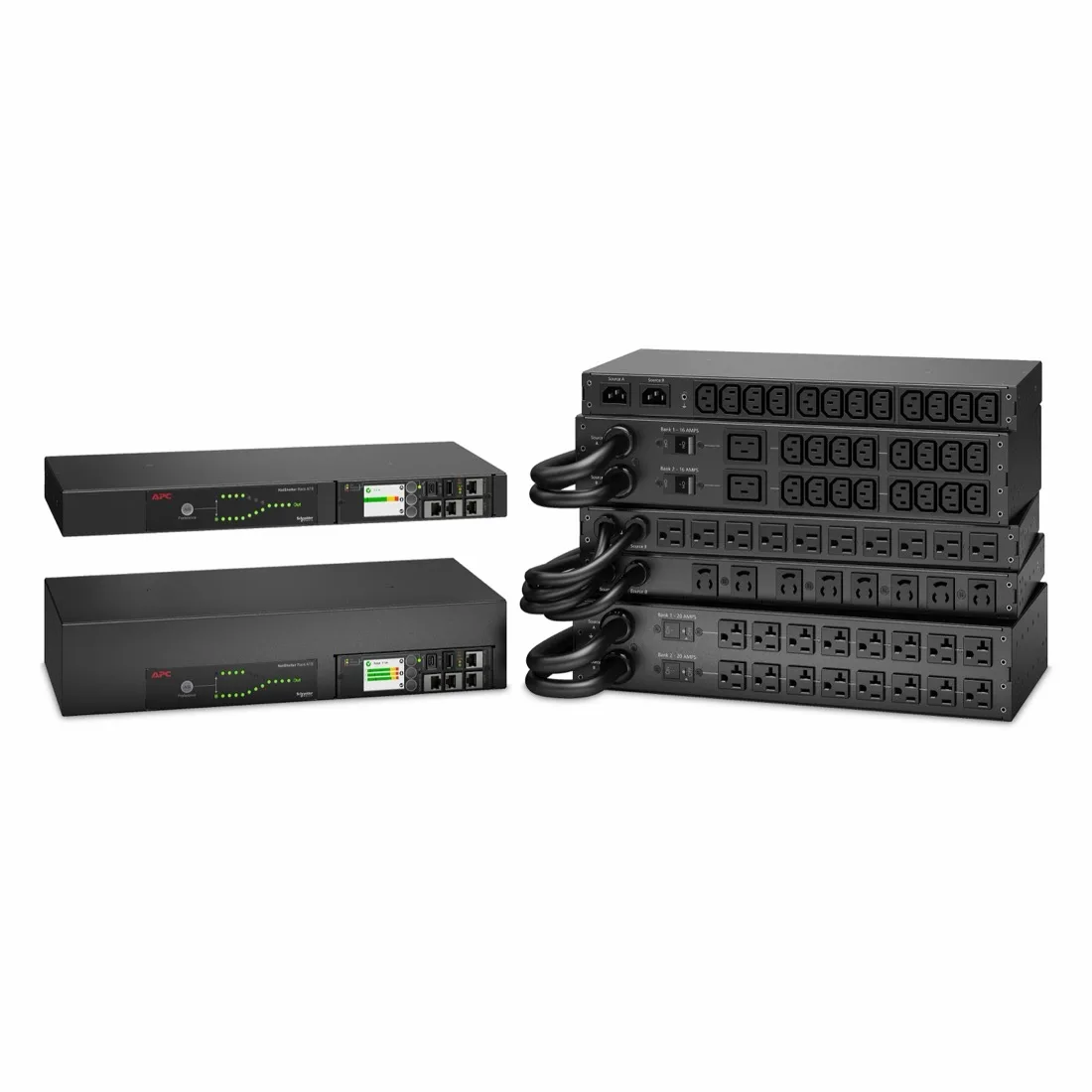
Dual-corded servers already have two power supplies and need no help. The equipment that strands a rack is the single-corded box: a switch, an appliance, an older server. A rack ATS gives that device two feeds and one cord, which is usually far cheaper than replacing it with a dual-corded model.
The critical condition is that the two feeds must be genuinely separate all the way upstream. A rack ATS placed below two PDUs that share one breaker adds a component without adding resilience, and the arrangement looks correct from inside the cabinet.
Sizing a panel ATS
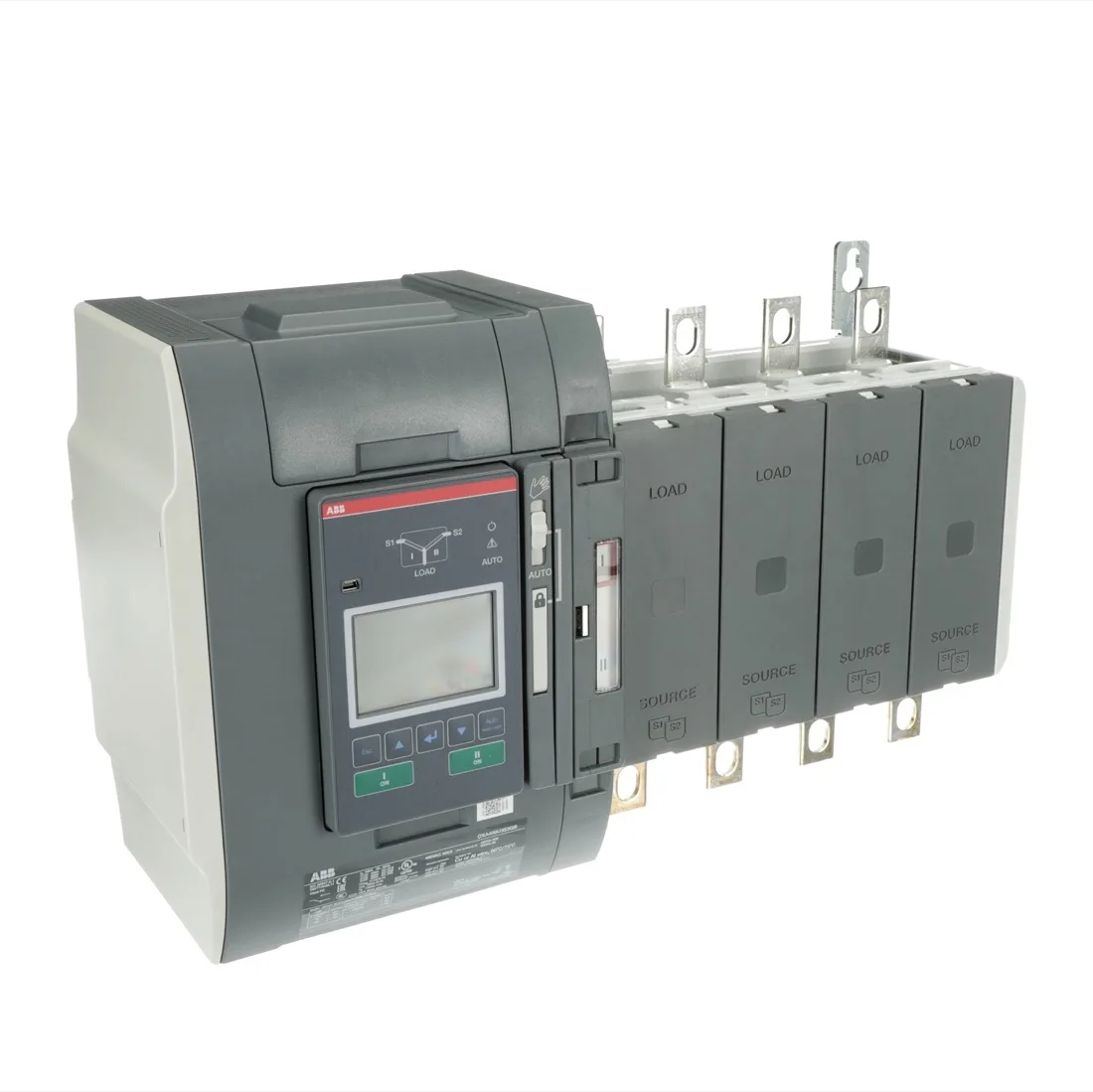
Size the switch on the full-load current of the supply it carries, then check it against the upstream protective device. Do not size on the generator’s nameplate kVA; the switch carries current, not kVA, and the two do not map cleanly once power factor enters.
Motor and UPS loads draw significant inrush at start, so the switch has to be rated for starting current as well as running current. A switch that is adequate in steady state and marginal on inrush will fail at the worst possible moment, which is precisely when the generator is starting.
Three poles or four
A four-pole switch breaks the neutral as well as the phases. It is required where the generator neutral is separately earthed, because leaving the neutrals connected creates parallel earth paths and defeats the earthing design.
Getting this wrong is not a performance issue, it is an earthing-system issue, and it is discovered at inspection rather than at commissioning. Confirm the earthing arrangement with the electrical designer before the order, not after.
Open, closed and delayed transition
- Open transition. The switch breaks from one source before making to the other. Simple, cheap and universal, with a brief interruption during the transfer.
- Closed transition. The sources are briefly paralleled so the load never sees a break. It requires the two sources to be synchronised and usually requires the utility’s agreement.
- Delayed transition. An intentional pause in the neutral position, which lets motor loads decay before they see a new supply out of phase.
For an IT room fed through a UPS, open transition is normally fine: the UPS covers the break. For direct motor or process loads, the choice is a real engineering decision.
Static transfer switches are a different device
A static transfer switch uses semiconductors rather than contacts and moves the load between two synchronised sources in a few milliseconds, fast enough that connected equipment never notices. STS units sit downstream of two UPS systems to give single-corded equipment genuine dual-path power.
They are not interchangeable with a mechanical ATS. The choice follows how much interruption the load will tolerate and whether the two sources are synchronised in the first place.
Manual and bypass arrangements
A manual transfer switch is adequate where transfers are rare and planned, such as connecting a portable generator during maintenance. It costs a fraction of an automatic device and requires somebody on site.
A bypass arrangement lets the switch itself be isolated and serviced without dropping the load. Above a certain rating this stops being optional, because taking the transfer switch out of circuit otherwise means taking the building out of circuit.
Where the ATS sits in the chain
Upstream of the UPS at building scale, downstream of it at rack scale. The panel ATS decides which source feeds the room; the UPS covers the seconds while that decision is executed; the rack PDU distributes the result. Sizing any one without the other two is how installations end up mismatched.
Controllers, integrated switches and what changes
Panel-type transfer switching is sold two ways. The traditional arrangement is a switching mechanism plus a separate controller, connected by wiring that you specify, install and commission. The integrated arrangement puts both in one device.
The practical difference is not performance but installation risk: fewer terminations to get wrong, a smaller panel section and a shorter commissioning visit. On a single site the saving is modest. On a rollout across many sites it compounds, and it also removes a class of fault that only appears under load.
Testing is part of owning one
A transfer switch that has never operated is an assumption. Most sites test monthly on load or at least quarterly, and the test is as much about the generator, the fuel and the controls as about the switch itself.
Log the transfer time and the return time each test. A switch that starts taking noticeably longer is telling you something about its contacts or its control supply well before it fails outright.
What to send with an enquiry
- Full-load current of the supply the switch will carry
- Number of poles and the earthing arrangement
- Whether the second source is a generator or a second utility feed
- Rack or panel format, and the enclosure it has to fit
- Any inrush-heavy loads downstream
Our transfer switches page lists the families we supply, from 1U rack units to 3200 A panel-type switches.
Need a quote on this?
Send the load, the capacity and the delivery country. A priced quote comes back within 48 hours.
Request a Quote