NetApp AFF A-Series, previous generation: A150 to A900
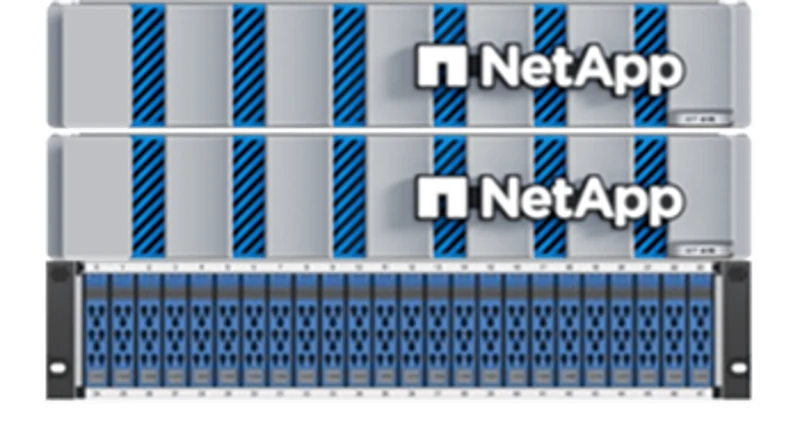
This is the AFF generation that preceded the A20 to A1K line: A150, A250, A400, A800 and A900. They run the same ONTAP operating system and the same data services as the current generation, and NetApp publishes effective capacity for them on a 5:1 efficiency assumption. They remain relevant where an existing cluster is being extended rather than replaced.
Technical specification
| Model | Type | Maximum capacity | Controller | Protocols | Drive type | Rack U |
|---|---|---|---|---|---|---|
| AFF A150 | All-flash unified storage (previous generation) | 26 PB effective (5:1) | Active-active pair; up to 864 SSDs | FC, iSCSI, NVMe/FC, NVMe/TCP, NFS, SMB, S3 | SFF NVMe SSD | 2U; 24 internal SSD slots |
| AFF A250 | All-flash unified storage (previous generation) | 702.7 PB effective (5:1) | Active-active pair; up to 5,760 SSDs | FC, iSCSI, NVMe/FC, NVMe/TCP, NFS, SMB, S3 | SFF NVMe SSD | 8U |
| AFF A400 | All-flash unified storage (previous generation) | 185 PB effective (5:1) | Active-active pair; up to 2,880 SSDs | FC, iSCSI, NVMe/FC, NVMe/TCP, NFS, SMB, S3 | SFF NVMe SSD | 4U; 48 internal SSD slots |
| AFF A800 | All-flash unified storage (previous generation) | 185 PB effective (5:1) | Active-active pair; up to 2,880 SSDs | FC, iSCSI, NVMe/FC, NVMe/TCP, NFS, SMB, S3 | SFF NVMe SSD | 4U; 48 internal SSD slots |
| AFF A900 | All-flash unified storage (previous generation) | 185 PB effective (5:1) | Active-active pair; up to 2,880 SSDs | FC, iSCSI, NVMe/FC, NVMe/TCP, NFS, SMB, S3 | SFF NVMe SSD | 2 × 2U |
Source of the values: NetApp AFF A-Series datasheet (previous generation). This is the superseded generation; the current AFF A-Series is listed on its own page. An en dash means the manufacturer does not publish that value; we do not fill it in with an estimate. Confirm every figure against the current manufacturer document before it is written into a contract.
The references we quote in this family are AFF A150, AFF A250, AFF A400, AFF A800 and AFF A900. Send us the reference if you already have one, or the usable capacity and the protocol you need if you do not, and we will confirm availability and lead time.
Which one should you choose?
Extending a cluster is the usual reason
ONTAP clusters mix generations. If you already run A400 or A800 nodes, adding a matching node is often simpler and cheaper than introducing a new generation with a different minimum ONTAP version. If you are starting fresh, the current generation is the better purchase.
Form factor varies more than you expect
Within this generation the chassis runs from 2U on the A150 to 8U on the A250 and 2x2U on the A900. The rack footprint therefore does not follow the model number in a straight line. Check the physical specification against the cabinet before assuming a larger model simply takes more units.
Effective capacity assumes a reduction ratio
The figures NetApp publishes are effective, based on 5:1 storage efficiency with the maximum number of SSDs installed. Our table marks every cell. If your data does not reduce at that rate, and databases with encryption often do not, the usable figure is materially lower. Ask for a sizing against your own dataset.
Support horizon is a real factor
A superseded generation has a shorter remaining support life than the current one. For a three-year project that may not matter; for a seven-year one it does. Ask us for the current end-of-support position before you decide, because it is the difference between a bargain and a short-lived asset.
Protocol breadth is unchanged
This generation serves FC, iSCSI, NVMe/FC, NVMe/TCP, NFS, SMB and S3, the same breadth as the current line. If the requirement is one system that answers both the SAN and the NAS question, that has not changed between generations and should not drive the decision on its own.
Where it fits, and where it does not
Fits an existing ONTAP estate being extended, or a project where a proven generation at a better price outweighs a longer support horizon. Does not fit a new build with a long depreciation period, where the current AFF A-Series is the correct purchase.
What we need in order to quote it
- Whether an ONTAP cluster already exists and at what version
- Usable capacity after reduction, and the data profile
- Protocols required: SAN, NAS or both
- Rack units and power available
- Required support horizon in years
Request a Quote
Tell us the usable capacity, the protocol and the delivery country. A priced quote comes back within 48 hours, usually with a second option so the trade-off is visible.