Data centre cooling is the problem of removing heat at the rate the IT equipment produces it. Almost all the electrical energy delivered to a rack leaves it as heat, so a cabinet drawing 10 kW is a 10 kW heater running continuously. The cooling method you need follows directly from kilowatts per rack, not from the size of the room.
A note on scope: we supply cabinets, containment-ready enclosures, power distribution and the equipment that goes in the rack. We do not supply cooling plant. This article explains how the cooling decision is made because it changes what cabinet and what PDU you should buy.
Every watt in is a watt out
This is the whole basis of the discipline. A server converts electrical energy into computation and heat, and the computation part is thermodynamically negligible. Whatever the rack draws, the room has to remove.
The consequence is that power and cooling can never be designed separately. A room that can feed 15 kW per rack but only remove 7 kW is a 7 kW room, and the extra electrical capacity is money spent on something you cannot use.
Kilowatts per rack decides the method
The thresholds are approximate and depend on ceiling height, floor void, row layout and how disciplined the containment is. The order, however, never changes: room cooling, then containment, then bringing the cooling closer to the rack, then liquid.
Why containment is the biggest single step
In an uncontained room, hot exhaust air leaves the back of a cabinet and finds its way around the row to the front, where the equipment draws it back in. The cooling system then spends its capacity cooling air it has already cooled, and the inlet temperature at the top of the rack rises well above the room setpoint.
Containment separates the two air paths physically. Either the cold aisle is enclosed and the rest of the room becomes the hot return, or the hot aisle is enclosed and ducted away. Either way the same cooling plant suddenly delivers considerably more usable capacity, without buying more of it.
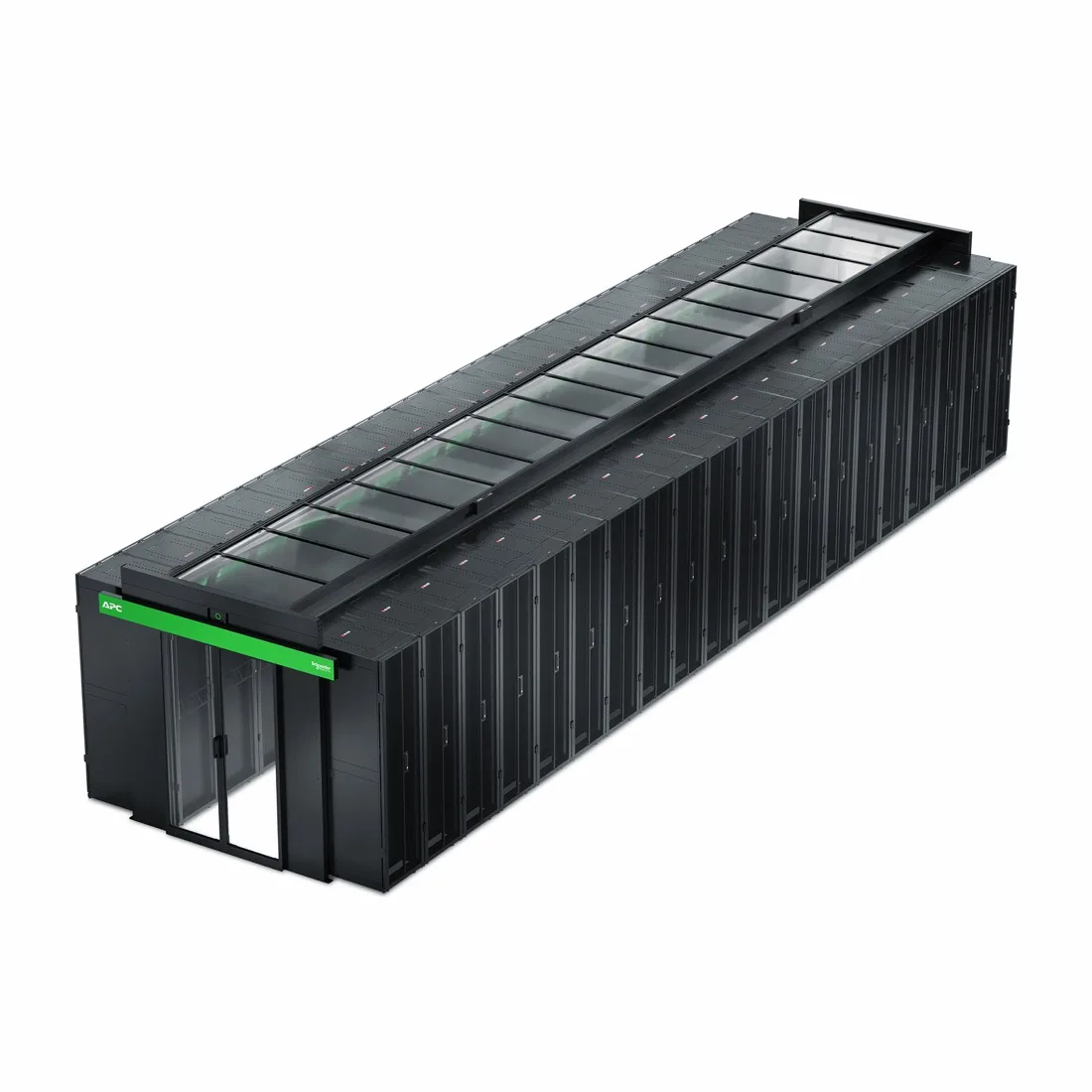
What the rack has to do for containment to work
Containment fails quietly if the cabinets leak. Three things matter, and all three are cabinet decisions rather than cooling decisions:
- Blanking panels in every unused U. An open U is a direct short circuit between hot and cold aisles.
- Brush strips or grommets at every cable entry. Floor and roof openings leak more air than people expect.
- Perforated doors with adequate open area. A solid or lightly perforated door restricts the airflow the fans are trying to move.
This is why cabinet specification and cooling design belong in the same conversation. Ordering doors, blanks and roof panels with the cabinets is far cheaper than retrofitting them once the row is live.
Measuring instead of guessing
The number that tells you whether cooling is working is inlet temperature at the top of the rack, not the room temperature at head height. The top of a cabinet is where recirculation shows up first.
Intelligent rack PDUs usually accept temperature sensors, which makes per-rack inlet temperature a by-product of power monitoring you were probably buying anyway. That is the cheapest instrumentation you can add, and it turns containment from an assumption into a measurement.
Raised floor, overhead, or neither
A raised floor distributes cold air under the room and delivers it through perforated tiles in the cold aisle. It is flexible and it is also where cable congestion goes to strangle airflow if nobody manages it.
Overhead distribution avoids the floor void entirely and suits buildings with no structural depth to give. It requires more careful ductwork and it makes the ceiling busy, since cable trays and containment roofs are competing for the same space.
Many modern rooms use neither and rely on close-coupled cooling instead, which brings the cooling unit into the row and shortens the air path to a few metres.
Redundancy applies to cooling too
N+1 is as meaningful for cooling as for power, and it is more often forgotten. A room with exactly enough cooling has no capacity to lose a unit for maintenance, and cooling units need maintenance far more often than UPS systems do.
There is also a time constant that power does not have. When the UPS fails, the load drops instantly and visibly. When cooling fails, the room heats over minutes, and a dense room can reach shutdown temperatures faster than an operator can respond. Thermal ride-through is a design decision, not a hope.
Efficiency: the number everyone quotes
Power usage effectiveness, PUE, is total facility power divided by IT power. A PUE of 1.5 means half a watt of overhead for every watt of IT. It is useful for tracking a single site over time and close to useless for comparing two different sites, because it is sensitive to climate, load factor and where the measurement boundary is drawn.
Improving it is mostly unglamorous: contain the aisles, fit the blanks, raise the supply temperature to the highest value the equipment is rated for, and stop cooling air that has already been cooled.
Free cooling and why climate matters
For a large part of the year in many climates, outside air is colder than the return air from a data hall. Economiser designs use that directly, either by bringing filtered outside air in or by using it to cool a water loop, and mechanical refrigeration only runs when the weather does not cooperate.
The hours available depend entirely on location and on how warm you are willing to run the supply air. Raising the supply temperature by a couple of degrees, within what the equipment is rated for, can add a meaningful number of free-cooling hours per year without buying anything.
What this means when you are buying equipment
Settle kilowatts per rack first. That number chooses your cooling method, and it also chooses your cabinet width and depth, your PDU input rating and phase arrangement, and the feed the UPS has to deliver to the row. Four decisions, one number, and it is the number most enquiries leave out.
Need a quote on this?
Send the load, the capacity and the delivery country. A priced quote comes back within 48 hours.
Request a Quote