ABB DPA UPScale ST and RI: 10 to 200 kW modular
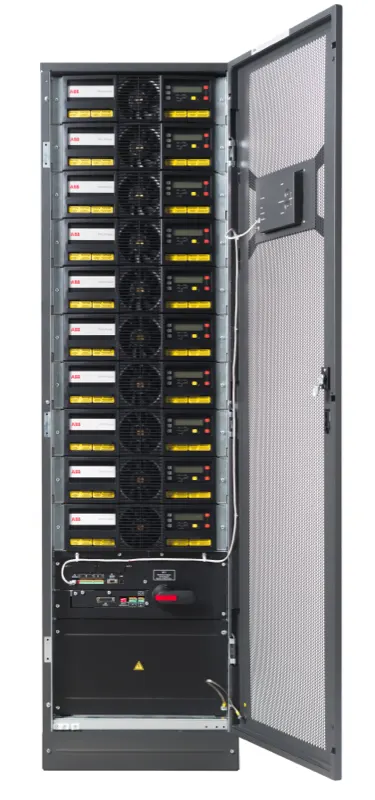
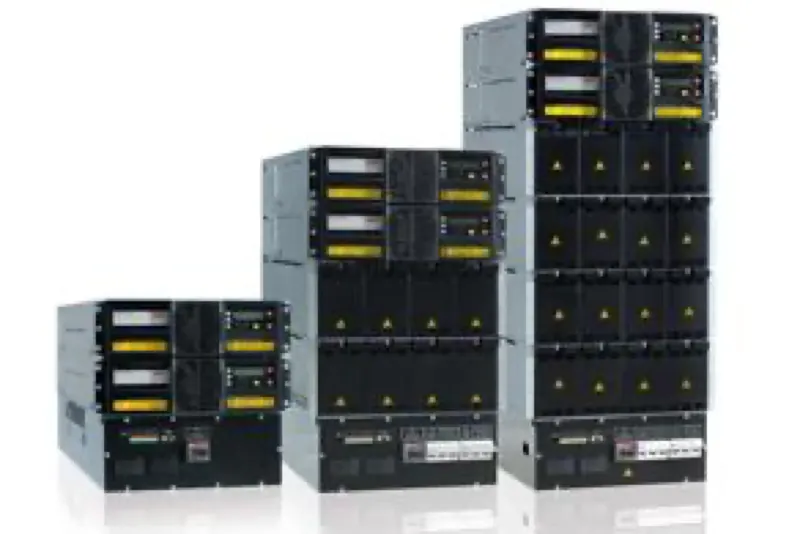
DPA UPScale covers 10 to 200 kW in two installation styles: ST is a standalone cabinet, RI is designed to be rack-integrated. Both use the decentralised parallel architecture, so modularity and hot-swap reach much lower capacities than the large DPA frames. This is the smallest genuinely modular class we quote.
Technical specification
| Model code | Power | Input / output voltage | Phases | Topology | Efficiency | Dimensions W×D×H (mm) | Weight | Parallel / redundancy | Battery type |
|---|---|---|---|---|---|---|---|---|---|
| DPA UPScale ST S2 40 | 40 kW | – | Three-phase | On-line double conversion, modular decentralized parallel architecture; M10 (10 kW) / M20 (20 kW) modules; VFI-SS-111 | Up to 96% on-line; eco mode ≥98% | – | 92 kg (empty frame) / 130-136 kg (with modules) | N+1 within the frame, up to 4 frames in parallel (400 kW) | 12 V VRLA; internal battery blocks on the 40 and 60 kW frames |
| DPA UPScale ST S2 60 | 60 kW | – | Three-phase | On-line double conversion, modular decentralized parallel architecture; M10 (10 kW) / M20 (20 kW) modules; VFI-SS-111 | Up to 96% on-line; eco mode ≥98% | – | 173 kg (empty frame) / 229-238 kg (with modules) | N+1 within the frame, up to 4 frames in parallel (400 kW) | 12 V VRLA; internal battery blocks on the 40 and 60 kW frames |
| DPA UPScale ST S2 80 | 80 kW | – | Three-phase | On-line double conversion, modular decentralized parallel architecture; M10 (10 kW) / M20 (20 kW) modules; VFI-SS-111 | Up to 96% on-line; eco mode ≥98% | – | 82 kg (empty frame) / 157-169 kg (with modules) | N+1 within the frame, up to 4 frames in parallel (400 kW) | 12 V VRLA; internal battery blocks on the 40 and 60 kW frames |
| DPA UPScale ST S2 120 | 120 kW | – | Three-phase | On-line double conversion, modular decentralized parallel architecture; M10 (10 kW) / M20 (20 kW) modules; VFI-SS-111 | Up to 96% on-line; eco mode ≥98% | – | 133 kg (empty frame) / 245-263 kg (with modules) | N+1 within the frame, up to 4 frames in parallel (400 kW) | 12 V VRLA; internal battery blocks on the 40 and 60 kW frames |
| DPA UPScale ST S2 200 | 200 kW | – | Three-phase | On-line double conversion, modular decentralized parallel architecture; M10 (10 kW) / M20 (20 kW) modules; VFI-SS-111 | Up to 96% on-line; eco mode ≥98% | – | 174 kg (empty frame) / 360-389 kg (with modules) | N+1 within the frame, up to 4 frames in parallel (400 kW) | 12 V VRLA; internal battery blocks on the 40 and 60 kW frames |
Source of the values: ABB DPA UPScale ST S2 10-200 kW technical specification (TDS … REV-E). The datasheet publishes four frame sizes against five ratings without a one-to-one mapping, so the dimension cells are left blank. The RI variant covers the same 10-200 kW range in a rack-integrable frame. An en dash means the manufacturer does not publish that value; we do not fill it in with an estimate. Confirm every figure against the current manufacturer document before it is written into a contract.
The references we quote in this family are DPA UPScale ST S2 40, DPA UPScale ST S2 60, DPA UPScale ST S2 80, DPA UPScale ST S2 120 and DPA UPScale ST S2 200. Send us the reference if you already have one, or the load in kW and the runtime if you do not, and we will confirm availability and lead time.
Which one should you choose?
ST or RI is an installation decision
ST arrives as its own cabinet and stands beside the racks. RI integrates into a 19-inch rack, which suits a site that has cabinet space but no floor area to give a separate UPS. The electrical behaviour is the same; the room decides.
Modularity this low is unusual
Below 200 kW most competing products are monolithic. Getting hot-swappable modules and cheap N+1 at 10 to 200 kW is the reason this family appears in specifications that would otherwise be a single-block purchase. It costs more per kW at the start.
Growth in small steps
A room that adds a rack or two per year is exactly the shape this family is built for: buy 40 kW now, add modules as the load arrives, avoid running a 100 kW frame at 30% for three years. If the load is already known and static, a monolithic unit is honestly cheaper.
RI needs the rack checked first
Rack integration only works if the cabinet has the depth, the rail type and the free U the unit expects, and if the floor under it carries the added weight. Measure all four before choosing RI over ST; a unit that will not fit the existing rack is a more expensive problem than a standalone cabinet.
Where it fits, and where it does not
Fits a server room or small data hall between 10 and 200 kW whose load grows in steps, or which needs N+1 without buying a second complete system. Does not fit a static, fully known load, and does not fit above 200 kW.
What we need in order to quote it
- Load in kW today and the growth per year you expect
- ST or RI, and if RI the rack space and depth available
- Redundancy level required at module level
- Runtime target and battery arrangement
- Whether a monolithic alternative should be quoted for comparison
Request a Quote
Tell us the load in kW, the runtime you want and the delivery country. A priced quote comes back within 48 hours, usually with a second option so the trade-off is visible.